

The ohm TECHNOLOGY Way - Interconnecting our Campuses:
Advantages
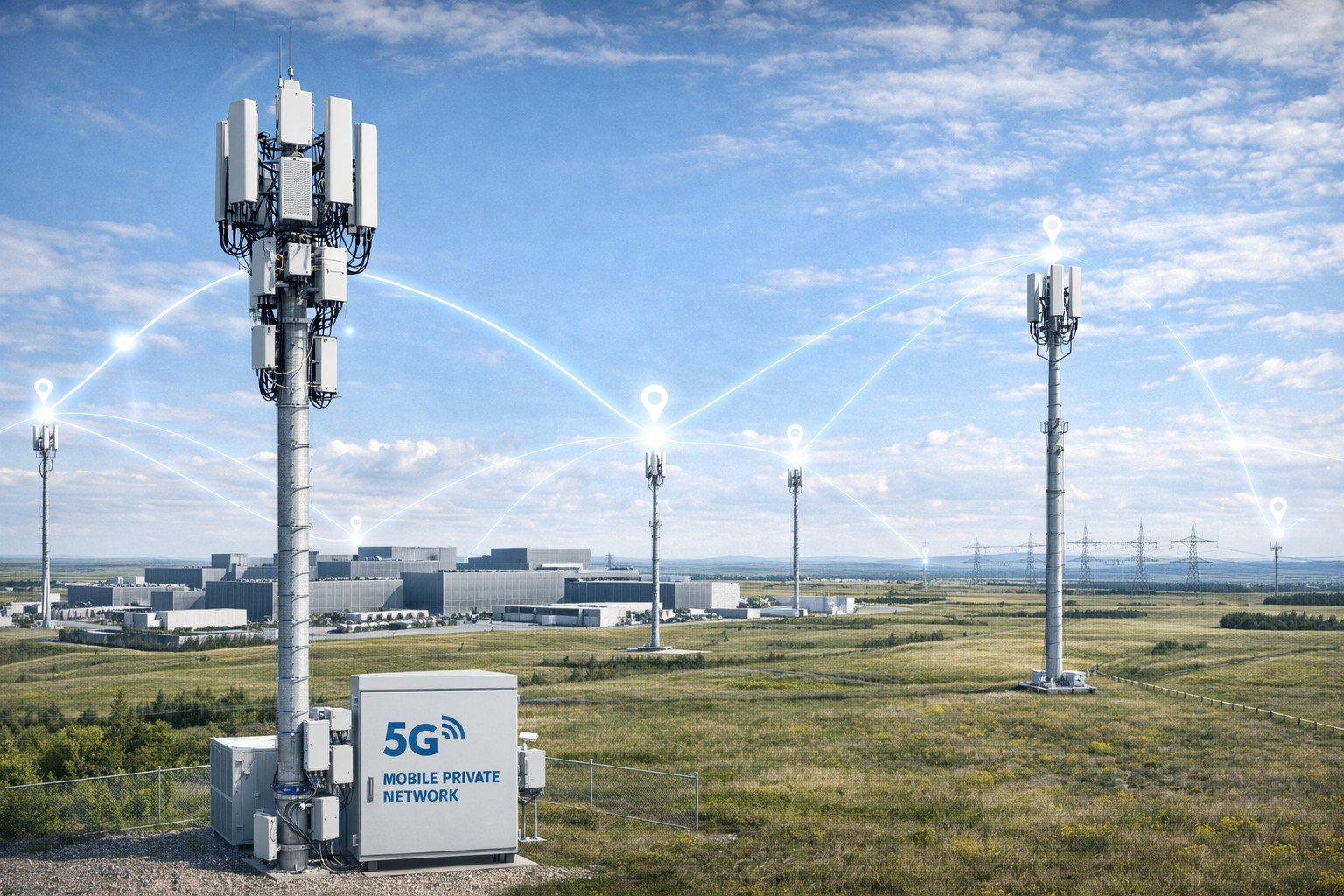
A private 5G network delivers ultra-low latency, high bandwidth, and predictable performance tailored to enterprise workloads. Unlike public networks, capacity is reserved exclusively for the organization, ensuring consistent connectivity for applications such as industrial automation, real-time monitoring, IoT at scale, autonomous systems, and secure campus communications. The network can be customized, scaled on demand, and fully integrated with existing IT, OT, and cloud infrastructure.
Reliability
Built on 5G’s advanced architecture, private radio networks support high availability, seamless mobility, and resilient operations. Features such as network slicing, edge computing, and redundant core components enable deterministic performance and continuous uptime—even in remote, industrial, or harsh environments.
A 5G Mobile Private Radio Network gives enterprises a dedicated, carrier-grade wireless environment designed for mission-critical operations where performance, reliability, and security cannot be compromised.

Security
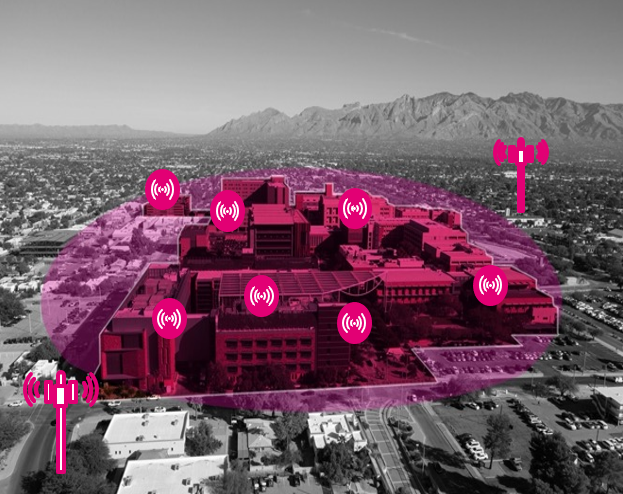
Security is a core strength of private 5G. The network is fully isolated from public carriers, significantly reducing exposure to external threats. End-to-end encryption, SIM-based authentication, strict device access control, and policy-driven segmentation protect data in transit and at rest. Enterprises maintain full visibility and governance over users, devices, and traffic, enabling compliance with stringent regulatory and security requirements.
Ultra-Low Latency
Private 5G networks can provide latency as low as 1 millisecond. This is essential for real-time applications like autonomous robotics, remote surgery, and industrial automation.
Full Control & Customization
Administrators can prioritize specific traffic (e.g., giving emergency communications or robots higher priority than guest tablets) and customize coverage areas to include challenging indoor or outdoor environments.